Susan Kare – How the Macintosh Icons Began
Before she drew the icons for the Macintosh, Susan Kare was welding a life-size razorback hog for a museum in Arkansas. Her high-school friend Andy Hertzfeld, who was working on the Macintosh software, showed her an early prototype.
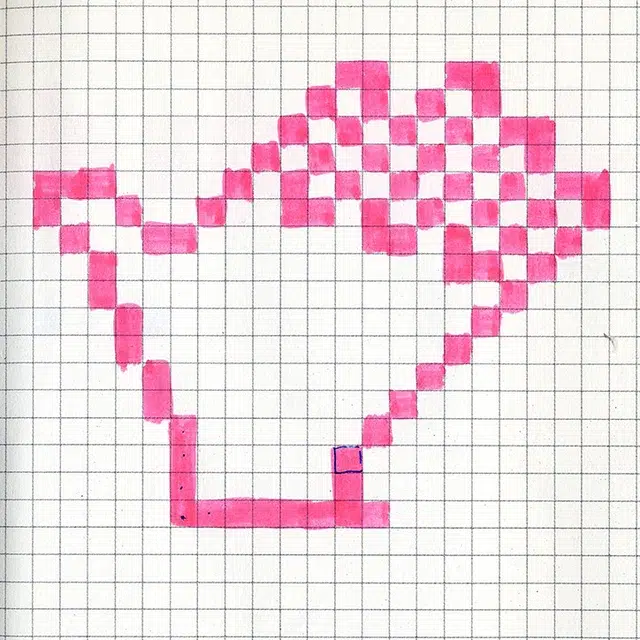
He needed small images for the screen and suggested she draw them on graph paper. Each square would become one pixel. For those first drawings, Kare received an Apple II. In 1983, she joined the Macintosh team to design icons and typefaces.

32 × 32 grid
Hertzfeld built an editor that let Kare work on an enlarged 32 × 32 grid and see the icon at its actual size beside it. She could click a square to switch it from black to white and immediately see what that single pixel did to the image.
Kare usually drew several versions and asked people what they thought each one meant. For the fill tool in MacPaint, she tried paint rollers and other ideas. A can pouring paint made the most sense to people. folklore.org
Some ideas carried over from the Apple Lisa. Kare redrew its trash can to suit the Macintosh’s square pixels. Others gave the Mac a character of its own. A tiny smiling computer, the Happy Mac, greeted users at startup. A little bomb told them when something had gone seriously wrong. web.stanford.edu

Book of symbols
One of Kare’s most enduring designs came from a book of symbols.
The team needed a replacement for the Apple logo beside keyboard shortcuts in the menus. Kare found a looped symbol used on signs in Swedish campgrounds to mark a place of interest. It was simple enough to draw in pixels and small enough to fit on a key. That is how ⌘ became the Macintosh Command symbol, still used on Mac keyboards today.

Signed Prints available at the museum shop
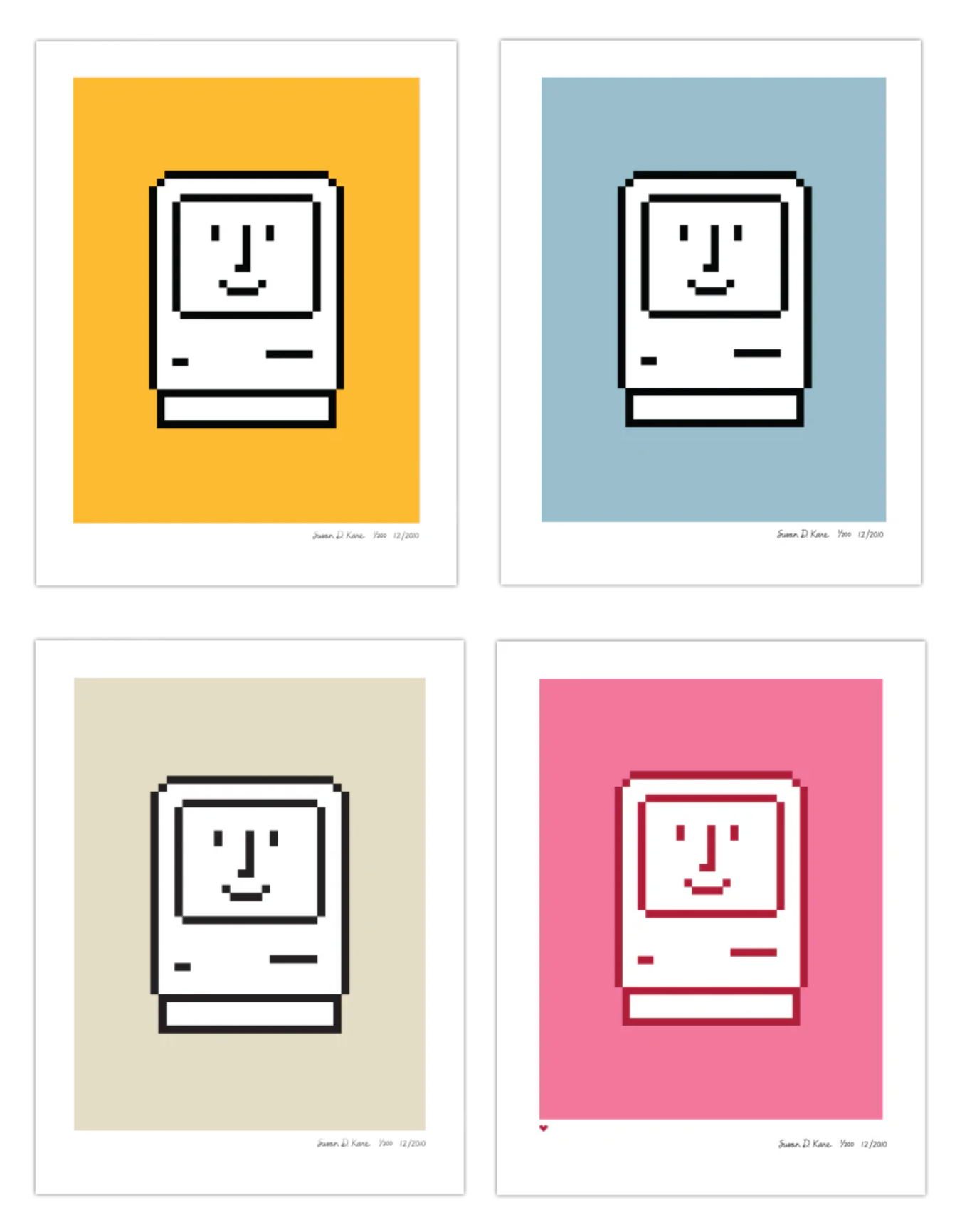
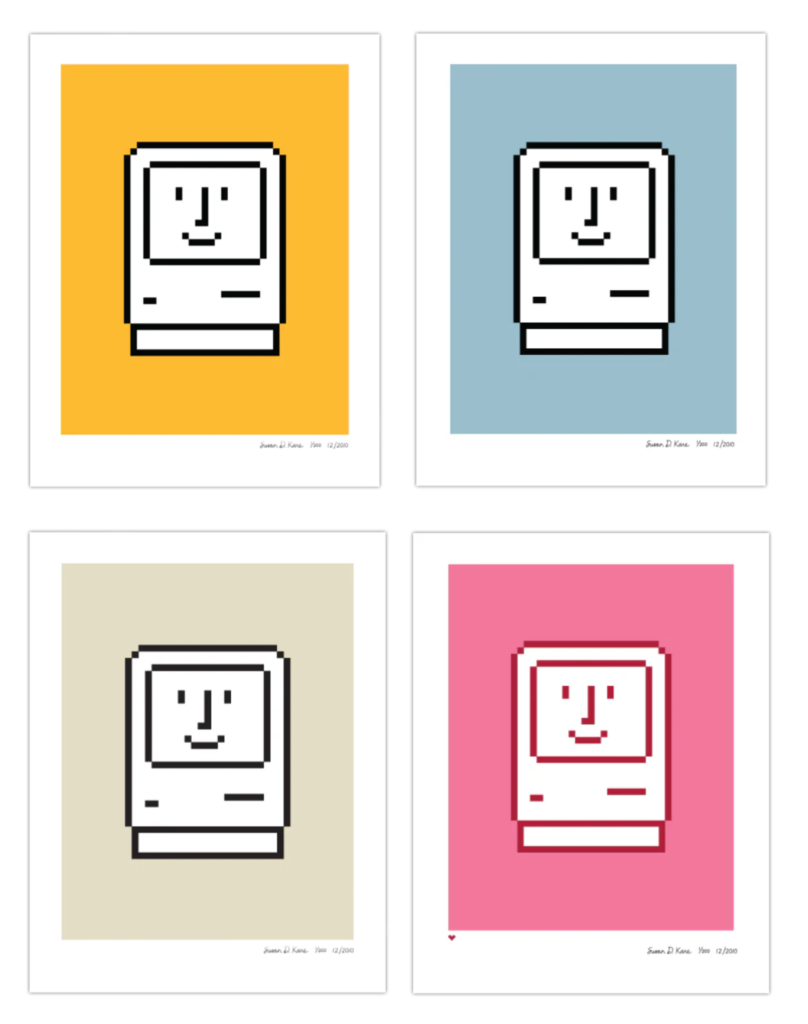
Susan Kare drew her original Macintosh icons in black and white. In these colour editions, the same pixel shapes take on a new character.
The prints are especially striking when hung side by side. The colours play off one another, and the shared pixel style makes them work beautifully as a series.
The Museum Shop at The Apple Museum in Utrecht offers an exclusive selection of these original giclée fine-art prints. Each design is produced in a small edition of 200, and Kare signs, numbers and dates every print by hand. They are printed with archival inks on acid-free Hahnemühle Photo Rag paper.


You might also like
Discover related articles to the one you just read.