Wishlist
The Apple Museum Wishlist highlights a selection of rare and remarkable Apple artifacts we would love to add to our collection. Help us preserve the story of Apple innovation for future generations. Depending on your preference, we can display an item on loan, purchase it for the collection, or welcome it as a donation to the Apple Museum Foundation.

Apple 1
We are currently showing an Apple 1 replica. A nice one but it’s not the real thing that was touched by Apple’s founders and history. So if you own an original Apple 1 that is collecting dust and would like the world to see it in a shrine like exhibition – please contact us. The display is prepared for an original Apple 1 with a high security display that is like a fault and many other visible and invisible security measures.
Get in touch


MacCharlie
We’re looking for a MacCharlie, one of the most unusual add-ons ever made for the Macintosh. Released in 1985 by Dayna Communications, it let the original Mac run MS-DOS software by attaching a second computer to its side, complete with its own CPU, RAM, and floppy drive. Few were sold, and even fewer survived until today. We would like to show it to help tell the story of early attempts to bridge the Mac and PC worlds.
Get in touch

The First Microsoft Word/Excel boxes
One often-heard reason why people supposedly “can’t use a Macintosh” was that they needed Microsoft Word and Excel. In the museum, visitors can try Microsoft Word and Multiplan for Macintosh from 1984, and Excel for Macintosh from 1985. Windows versions followed only several years later. Unfortunately, we do not yet have the complete original boxes to show this properly. We are looking for boxed first Macintosh versions of Word, Multiplan and Excel to help tell this story.
Get in touch

Canon Cat
Launched in 1987, the Canon Cat was a revolutionary ‘work processor’ designed by Jef Raskin – who named the Macintosh. This was his original vision for the Macintosh. The Cat featured a 9-inch monochrome screen and used ‘Leap’ keys instead of a mouse. Despite its innovative features, it was a commercial failure. However, still important for the Museums story due to his background at Apple.
Get in touch

Apple II Leather Carrying Bag
We’re looking for the original Apple II leather carrying bag, embossed with the full Apple logo. This elegant brown leather bag is one of the rarest Apple accessories ever made and is rare today. It reflects an early moment when Apple was already combining technology, design, and lifestyle. We’d love to display one in the museum as part of Apple’s early brand identity.
Get in touch
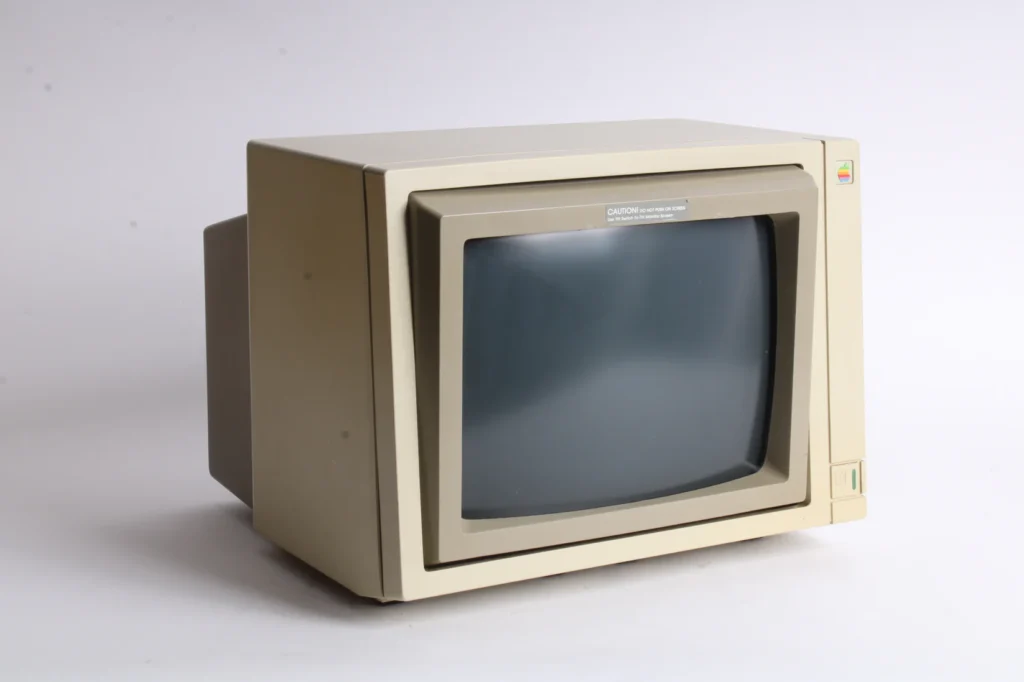
Apple Color Monitor 100 Motorized
The Apple Color Monitor 100 (model A9M0308) is a rare 12-inch RGB monitor introduced in 1984. Designed for the Apple //e and Apple ///, it is best known for its unique motorized tilt mechanism. We would really like to add this to our collection, so we can show it to the world.
Get in touch

Apple IIGS Upgrade Kit
We’re looking for the official Apple IIGS Upgrade Kit, or an Apple //e upgraded with it. This rare kit let users move from the Apple IIe to the more powerful 16-bit Apple IIGS without buying a completely new machine. It’s a unique example of Apple’s approach to upgrades and backward compatibility. We’d love to add one to the museum to help tell this part of the Apple II story.
Get in touch

AppleColor Composite Monitor //e
We’re looking for an AppleColor Composite Monitor //e, a rare and important part of Apple’s early color computing history. Designed for the Apple II family, it offered vivid color graphics and 80-column text through a simple composite video connection, without extra cards or adapters. Because it was never officially sold in Europe, it’s an especially hard-to-find piece here. We’re currently hoping to add one to complete our display.
Get in touch
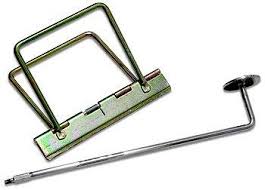
Original Macintosh opening tools
These are the kind of tools once used to open the first Macintosh computers for service. Unlike the Apple II, Steve Jobs wanted the Macintosh to remain a closed system, not intended to be opened by users. If you happen to own the original tools, we would love to display them alongside the Macintosh 128K in the museum.
Get in touch

Macintosh Colour Classic II <DONATED! :)>
We’re looking for the Macintosh Color Classic II, the second-generation model in the Color Classic line. This version is extremely rare, having been officially sold only in Japan and Canada. With its faster processor and improved performance, it remains a favorite among collectors and modders. We’re specifically looking for the Color Classic II, not the original model, and would love to add one to the museum.
Get in touch