The Story
The Garage
This is where something began that would change the world. Steve Jobs and Steve Wozniak often spend time here. Wozniak is the technical builder, more than four years older, a true inventor. Jobs is the dreamer, with a sharp eye for what something could become — and for what people would want, even before they knew it themselves.
What The Garage changed
-
The personal computer
In the early 1970s, computers are still mostly seen as machines for governments and large companies. But in Silicon Valley, young inventors are building computers for ordinary people — in garages, bedrooms, and clubhouses. -
The first Apple
In 1976, Wozniak designs a computer mainly to impress friends at the Homebrew Computer Club, the breeding ground of the first personal computers. Woz wants to give the design away, but Jobs sees it immediately: this is something they should sell.
The Story
Apple 1
The Beginning of Apple and a revolution
Launched in 1976 this was the first Apple product and the result of friendship, vision, and perseverance. Steve Wozniak, known as “Woz”, designed the Apple 1 as a personal hobby project: brilliant in its simplicity, compact, and surprisingly complete. Steve Jobs recognized its commercial potential and convinced Woz to sell the motherboard fully assembled, unlike the build-it-yourself kits that were common at the time.
The Story
Apple ][
16 Years of Apple II
In 1977, Apple introduced the Apple II, a remarkably versatile personal computer with colour graphics, a built-in keyboard and eight expansion slots at a relatively affordable price.
Wozniak’s ingenious design made it easy to expand, while the Disk II floppy drive and groundbreaking software such as VisiCalc later transformed it into a powerful business tool.
The Apple II became enormously popular in homes, schools and businesses, supported by thousands of programs and games, and inspiring a thriving industry of compatible clones around the world.
From the original Apple II to the II Plus, IIe, IIc and IIGS, the family continued to evolve for an extraordinary 16 years. Even nine years after the Macintosh arrived, Apple was still selling the hugely successful IIe.
At The Apple Museum, a big room is dedicated to this remarkable computer family, its many variations and clones.
The Story
Lisa
Lisa was Apple’s ambitious attempt to reinvent how humans interact with computers. It helped move the world from typed commands to visual interfaces: windows, icons, menus, and a mouse. The idea existed in research labs, but Lisa pushed it toward a product that ordinary people could understand. It was expensive and imperfect, yet historically crucial. In this collection, Lisa is not framed as a failure, but as a breakthrough that made the Macintosh, and modern computing, inevitable.
What Lisa changed
-
From commands to clicks
Before Lisa, using a computer meant memorizing instructions. Lisa brought a visual interface where actions were discoverable. You could point, click, and learn by doing. -
From text to graphics: A whole new interface
The Apple Lisa project, launched in the early 1980s, started with a 'classical interface', but ended in a fundamental shift in how people interacted with computers. -
Apple Lisa Mouse – The First Mouse for the Masses
The mouse was not invented by Apple, but Apple’s work made it practical for mainstream use. Lisa helped establish pointing as the default way to operate a computer. We tell the story that started with Douglas Engelbart in 1964.... -
Failure? Not really.
Lisa was not a commercial succes. But without the Lisa, there would have been no Macintosh —and probably there would have been no Microsoft Windows either.
The Story
Macintosh
Macintosh made the graphical user interface personal. It took the ideas of visual computing and delivered them in a compact, friendly machine with a clear promise: a computer for the rest of us. The Mac was not only technology, it was a statement about human-centered design. This collection explores how Macintosh combined interface, software, and storytelling, including iconic marketing, to change expectations about what a computer should feel like.
What Macintosh changed
-
Usability becomes the product
Macintosh treated the interface as the core innovation. It made computing learnable, not by training, but by design. That mindset reshaped the market. -
Creativity moves onto the desktop
With tools like MacPaint and MacWrite, the Mac made creating visual and written work feel natural. It enabled people who were not “computer people” to produce real output. -
The power of narrative marketing
Apple’s 1984 story positioned the Mac as liberation, not just hardware. It showed that how you frame a product can define how people adopt it. -
Software partnerships mattered
Early on, major software makers supported the Mac. That signaled legitimacy and helped the Mac move beyond novelty into daily use.
The Story
The Grey Period
The Grey Period started after Steve Jobs left his Apple. It covers the years when Apple had talent and ambition, but lacked a clear identity. Product lines multiplied, strategies conflicted, and the broader PC market became cheaper and more flexible. Apple still made meaningful technology, but without a sharp story and a focused roadmap, the company lost momentum. This collection frames the era accurately: not as a void, but as the pressure that made Apple’s later simplification feel revolutionary.
What The Grey Period changed
-
Proved focus beats volume
Apple offered many models with overlapping names and purposes. The lesson was brutal: more choice can create more confusion, and confusion kills momentum. -
Competition became systemic
Windows PCs gained cost and software advantages. Even in creative fields, alternatives improved. Apple learned it could not rely on loyalty alone. -
Innovation without clarity is invisible
Apple built good machines, but without a simple narrative, it was hard for customers to understand why any specific model mattered. -
Set the stage for a reset
This period created urgency. It made the later return to simplicity, stronger design, and a tighter ecosystem feel like a rescue, because it was.
The Story
The Matrix
The Matrix is the moment Apple rebuilt itself into a coherent system again. It is not a slogan, it is a structure. Apple simplified the company around a focused product grid, consumer and professional, desktop and portable. That clarity enabled iconic products like the iMac and iBook, and later expanded into the larger Apple ecosystem: hardware, software, and services designed to work together. This collection shows how Apple regained control by making fewer, stronger bets.
What The Matrix changed
-
A company can be redesigned
Apple did not only redesign products, it redesigned priorities. A clear framework made decisions easier, faster, and more consistent. -
The iMac as a restart button
The iMac proved Apple could return with something bold, friendly, and mainstream. It made the company feel alive again, and it attracted new customers. -
Ecosystem thinking becomes explicit
The Matrix mindset pushed integration: devices and software that reinforce each other. That integration later became the foundation for iTunes, iPod, iPhone, and beyond. -
Transitions become a strength
Apple learned to navigate major platform shifts, like processor changes, by controlling the full experience. The Matrix era built the muscles for future transitions.
The Story
iPod
iPod made digital music feel effortless. Before the iPod arrived, carrying a large music library meant slow transfers, clunky devices, and confusing software. iPod combined elegant hardware with a simple interaction model, and later paired with iTunes for syncing and buying music. It did not invent MP3 players, it made them desirable and frictionless. This collection explores how iPod reshaped listening habits and helped Apple build the bridge from “computer company” to “personal device company.”
What iPod changed
-
Music becomes portable at scale
iPod turned “a few songs” into “your whole library.” That shift changed how people discovered, replayed, and shared music. -
Simplicity becomes a feature
The interface prioritized speed and clarity. When you can find any song quickly, the device feels invisible, and that is the goal. -
Software and hardware as one product
iPod’s success depended on the loop: rip, organize, sync, listen. Apple showed that the best device is often the best system. -
Apple earns daily habit
A computer is occasional. Music is daily. iPod put Apple in pockets and routines, preparing customers emotionally for the iPhone era.
The Story
iPad
iPad began as a new kind of computer: direct, lightweight, and built around touch. Over time, it evolved from a consumption device into a serious creation tool. With iPadOS, keyboards, Apple Pencil, and powerful chips, iPad became a flexible studio for writing, drawing, editing, and building. This collection highlights iPad’s evolution, the moments it surprised people, and the controversies that revealed how strongly audiences feel about creativity and culture.
What iPad changed
-
Computing becomes physical
Touch made interaction immediate. You do not “operate” the device, you manipulate content. That shift made digital work feel more human. -
The creator tablet becomes real
With Apple Pencil and pro apps, iPad turned into a legitimate creative workstation. For many workflows, it became “enough,” and sometimes better. -
Performance without complexity
As chips advanced, iPad gained power while staying simple. That combination is rare, and it explains why iPad fits both casual and professional users. -
A lesson in messaging (the 2024 backlash)
Apple’s “Crush” ad controversy showed how creative communities react to symbolism. It was a reminder that what you destroy in a story can matter as much as what you promise to enable.
The Story
iPhone
iPhone compressed a pocket full of tools into one object: phone, camera, music player, internet device, and later a platform for apps and services. It did not just improve the phone, it rewired expectations for communication, photography, navigation, and everyday problem-solving. This collection focuses on the iPhone as Apple’s most influential platform, and on the chain reaction it caused across industries, from software to media to retail.
What iPhone changed
-
The phone becomes a computer
iPhone made the internet portable, not as a reduced version, but as a primary way to live and work. The phone stopped being a feature list and became a platform. -
Apps create new economies
The App Store turned distribution into a button click. It lowered the barrier for developers and created entire categories of businesses. -
The camera becomes culture
Photography shifted from planned to constant. iPhone made sharing instantaneous, which changed how people document life, market products, and tell stories. -
Interface expectations reset
Multi-touch became the standard. Once people learned direct manipulation, old patterns felt dated. The industry followed.
The Story
Apple Watch
Apple Watch moved computing from pocket to wrist, where time, health, and notifications live. It started as a companion device, then grew into a health and fitness platform with real personal impact. Unlike many gadgets, it is built around daily behavior: movement, breathing, sleep, heart health, and quick communication. This collection explores how Apple Watch redefined what a watch can be, and how Apple turned sensors and software into motivation, awareness, and reassurance.
What Apple Watch changed
-
Health becomes continuous
Instead of occasional checkups, Apple Watch made health signals more visible day to day. Trends and alerts can prompt earlier action and better habits. -
Fitness becomes behavioral design
Rings, streaks, and gentle nudges turned exercise into a system. The product is not just tracking, it is motivation engineering. -
Notifications become glanceable
Apple Watch changed interaction design by making information digestible in seconds. It reduced the need to pull out a phone for every small moment. -
A new definition of “personal device”
Apple Watch is intimate. It is worn. It touches skin. That creates trust expectations, and it pushes Apple to design with care and responsibility.

 The Blue Box
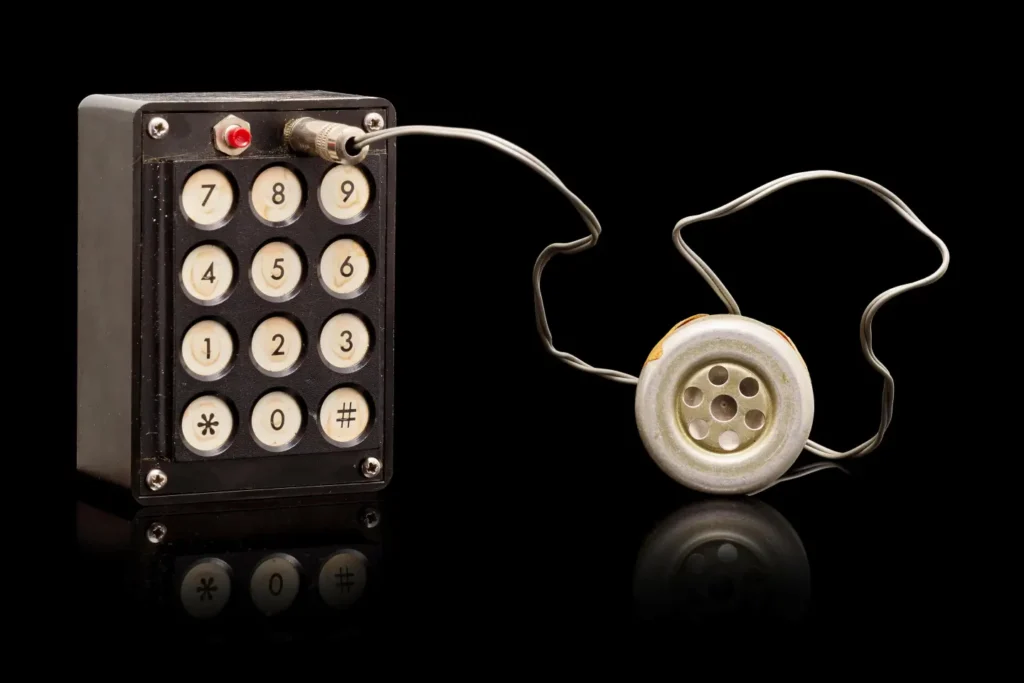
Their first project is not yet a computer. It is a small device: the Blue Box. Using the tones of the Blue Box, they can trick the telephone network and make free international calls. To test it, Wozniak calls the Vatican one night and pretends to be Henry Kissinger. He asks to speak to the Pope. But the Pope is still asleep.

The Garage as a strategy
Whether the very first Apple One was actually built in this exact garage is still debated. But one thing is certain: this is where the plan took shape. This is where people built, tested, talked, and laughed. And this is where Apple began — as an idea, as a collaboration, and as a friendship.

 The first Apple promise ⓘ
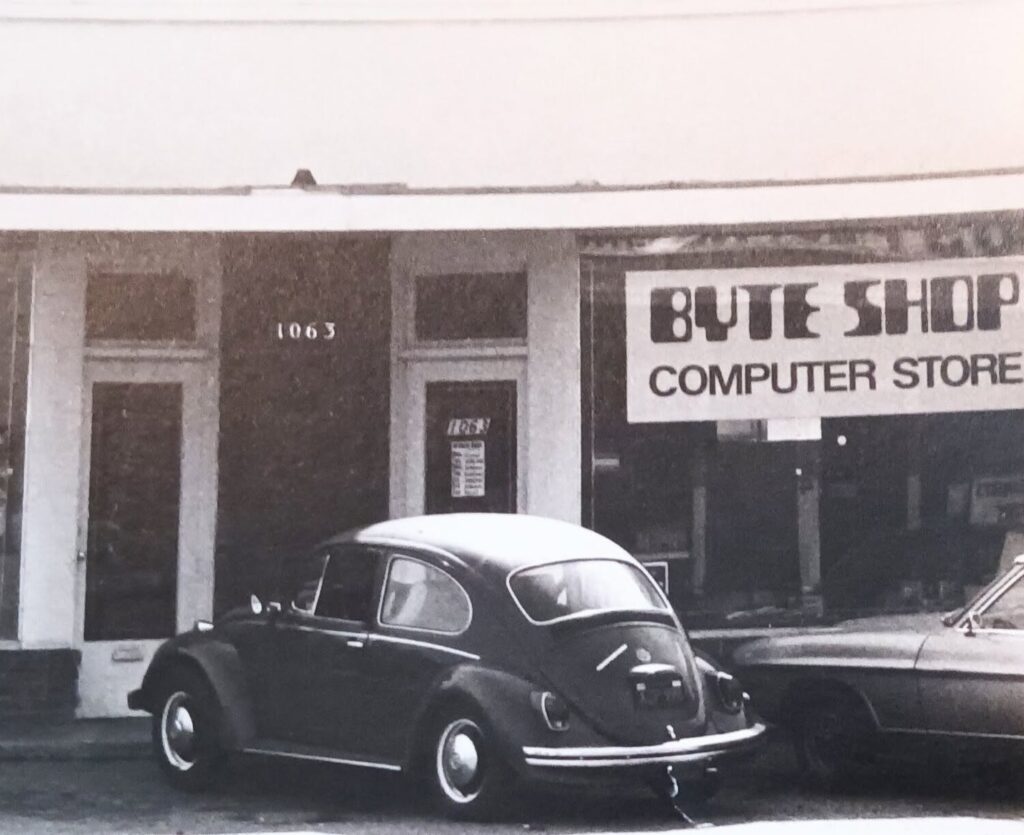
Apple’s first order came from The Byte Shop: 50 fully assembled Apple 1s. Jobs, Wozniak and friends worked in Jobs’ parents’ garage, turning a hobby project into a business. The Apple 1 sold for $666.66 because Wozniak liked repeating digits, unaware that 666 was also known as the biblical “number of the beast.”


 The Computer That Paid the Bills ⓘ
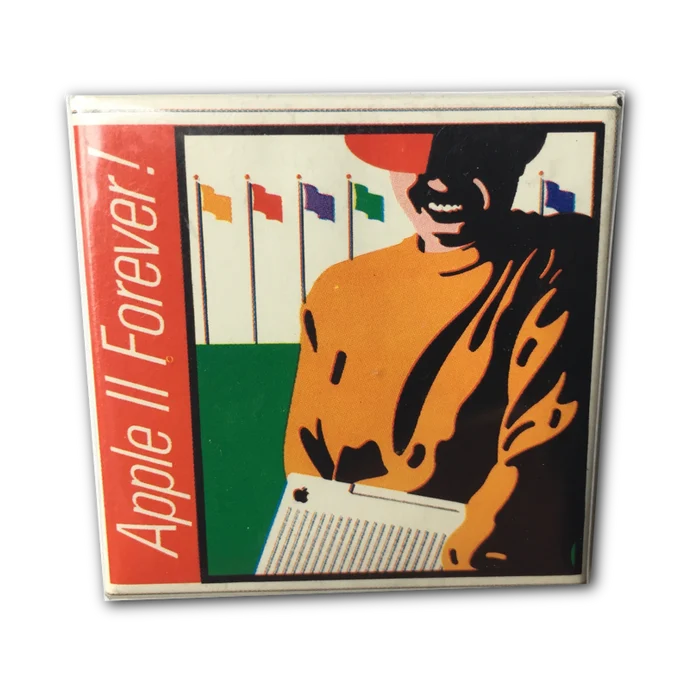
Six million Apple II computers were sold between 1977 and 1993. In 1983, Apple’s revenue reached $1 billion, thanks largely to the Apple II. Macintosh sales only overtook Apple II sales in 1988.


The Computer That Built Apple
Without the Apple II, Apple as we know it today might never have existed. That’s why we’ve devoted so much space to this remarkable computer and the genius of Steve Wozniak. Visitors can use three working Apple II computers themselves. The room also features the Apple ///, Apple’s ambitious but unsuccessful attempt to conquer the business market.
The cost of being early
Lisa proves a common truth in innovation: being early is expensive. Hardware limitations, high cost, and market readiness all matter. But “early” also buys you influence. Lisa’s influence is everywhere: the way we open files, print documents, move windows, and learn software without manuals. It was the bridge between research and reality.


Why the Mac felt different
Macintosh changed computing because it reduced intimidation. It invited interaction. It was playful, clear, and opinionated. The Mac also set a pattern Apple repeats: combine hardware and software so the experience feels inevitable, like it could not have been made any other way. That is why Mac history is not only about models, it is about a design philosophy.


When the color reflects the mood
The “grey” identity is symbolic: product design, marketing tone, and internal direction felt less confident. Yet the era is important museum material because it shows the cost of indecision. It also highlights a theme visitors recognize in any industry: technology alone is not enough. You need a clear point of view, a reason to exist, and a plan customers can understand.


Focus is the unique mechanism
Many companies try to “innovate more.” Apple’s reset worked because it innovated with constraints. The Matrix reduced noise, then amplified what mattered: product identity, design language, and a cohesive experience. Visitors can see the pattern: when Apple is winning, the portfolio looks simple, but the execution is deep.
The device that taught Apple rhythm
iPod trained Apple to design around habit, not just capability. It also trained customers to expect a complete experience: device, software, content, and support working together. That expectation becomes the hidden engine behind Apple’s later services and ecosystem lock-in, in the positive sense of reliability and consistency.


The most debated Apple product
iPad sits in a productive tension: it is simpler than a laptop, but more capable than a phone. That in-between identity creates debate, and also opportunity. The iPad story is Apple’s ongoing experiment in what a computer can be when it is designed around touch, mobility, and creation. The best way to understand it is to see how it keeps expanding without losing its core feel.
The platform that ate the world
iPhone’s power is not only in the device, it is in what it replaced. It absorbed tools, markets, and habits. For Apple, it also became the gravitational center of the ecosystem, pulling services, wearables, and even the Mac into tighter integration. In museum terms, iPhone is a hinge point: “before iPhone” and “after iPhone” are different worlds.


 Fashion item
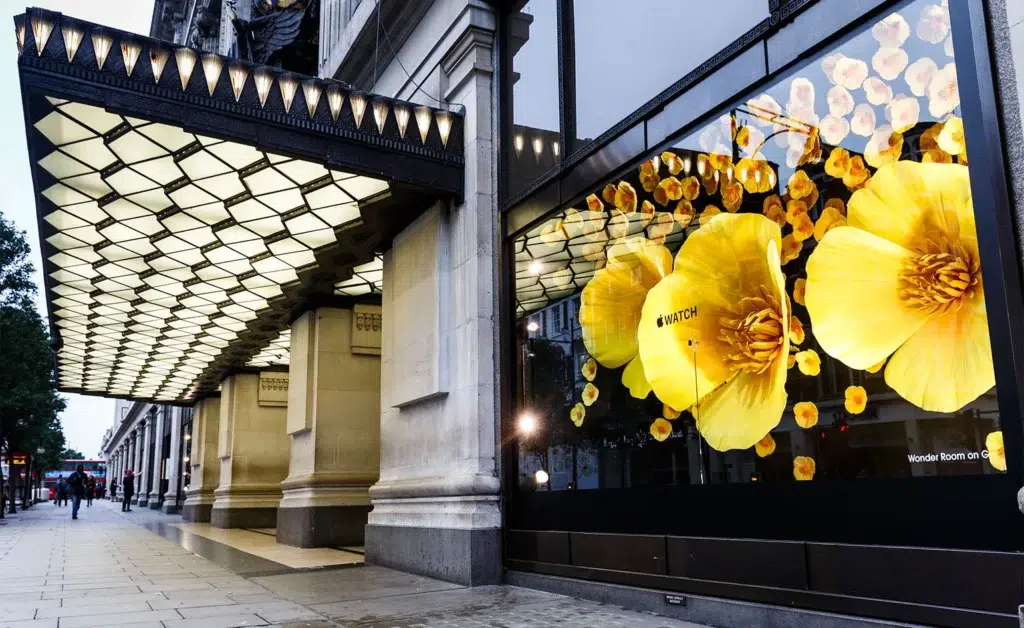
For the launch of the first Apple Watch, Apple collaborated with leading fashion houses and luxury boutiques. Influenced by Jony Ive and industrial designer Marc Newson, the Watch was presented as a piece of jewellery; Angela Ahrendts, former CEO of Burberry, translated that vision into Apple’s retail presentations. The flower installation recreated here was one of 24 exclusive window displays designed by Marc Newson for Selfridges in London. It formed the artistic statement of Apple’s first fashion-focused campaign: no technology, but flowers, colour and elegance – symbols of style and personality.
Technology that disappears into routine
Apple Watch succeeds when you stop thinking about it. It blends into life, but still changes behavior through subtle prompts and feedback. That is the shift: not “more features,” but “better routines.” In the Apple Museum, Apple Watch shows how Apple’s mission evolved from personal computing to personal wellbeing, without abandoning the same core principle: make complex technology feel simple.
Share this page
Stay ahead with exclusive updates in your inbox
Sign up for our newsletter and be the first to know about exciting exhibitions, rare Apple artifacts, and exclusive events. We'll deliver fascinating stories about how Apple revolutionized technology directly to your inbox. Join our community of Apple enthusiasts and never miss updates on the place where innovation history comes to life!