The Story
The Garage
This is where something began that would change the world. Steve Jobs and Steve Wozniak often spend time here. Wozniak is the technical builder, more than four years older, a true inventor. Jobs is the dreamer, with a sharp eye for what something could become — and for what people would want, even before they knew it themselves.
The Story
Apple 1
The Beginning of Apple and a revolution
Launched in 1976 this was the first Apple product and the result of friendship, vision, and perseverance. Steve Wozniak, known as “Woz”, designed the Apple 1 as a personal hobby project: brilliant in its simplicity, compact, and surprisingly complete. Steve Jobs recognized its commercial potential and convinced Woz to sell the motherboard fully assembled, unlike the build-it-yourself kits that were common at the time.
The Story
Apple ][
16 Years of Apple II
Introduced in 1977, Steve Wozniak’s Apple II combined colour graphics, a built-in keyboard and eight expansion slots. The Disk II drive and VisiCalc made it a powerful business tool, while thousands of games and educational programs brought it into homes and schools.
The family evolved through the II Plus, IIe, IIc and IIGS, remaining in production until 1993—nine years after the Macintosh arrived.
The Story
Lisa
Lisa was Apple’s ambitious attempt to reinvent how humans interact with computers. It helped move the world from typed commands to visual interfaces: windows, icons, menus, and a mouse. The idea existed in research labs, but Lisa pushed it toward a product that ordinary people could understand. It was expensive and imperfect, yet historically crucial. In this collection, Lisa is not framed as a failure, but as a breakthrough that made the Macintosh, and modern computing, inevitable.
Read the full story…
The Story
Macintosh
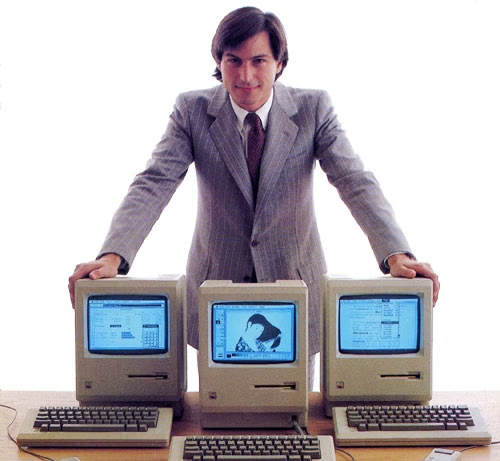
When Steve Jobs introduced the Macintosh in 1984, most personal computers were still dominated by text commands and blinking cursors. Apple had already introduced a graphical interface and mouse with the Lisa, but at nearly $10,000 it was far beyond the reach of most users. The Macintosh brought those ideas to a much wider audience for $2,495 — “the computer for the rest of us.”
It did not become an instant commercial success. The first Macintosh was expensive, limited to just 128 KB of memory and initially had little software. But the ideas behind it would change personal computing forever.
The Story
Grey Period
The years after Steve Jobs left Apple were not without innovation. But especially in the Macintosh business, it became less visible. Product lines multiplied, models looked increasingly alike, and several ambitious products became commercial failures. As Microsoft Windows improved and PCs became cheaper, Apple lost both focus and momentum.
During the Grey Period, Apple became literally and figuratively grey: too many similar products, less visible innovation and an increasingly uncertain direction.
The Story
The Matrix
The Matrix marked Apple’s return to focus. Steve Jobs reduced the product line to four clear categories: consumer and professional, desktop and portable. Projects and product lines that did not fit were cancelled, leaving Apple with fewer products, clearer priorities and a much simpler roadmap. The Matrix still defines Apple’s Mac lineup today.
This was only the beginning.
The Story
iPod
Steve Jobs introduced the first iPod in 2001 with the words “1,000 songs in your pocket”. This changed the music industry forever.
The iPod wasn’t the first mp3 player, but it was the first to combine technology, design, and ease of use in a way that made millions rediscover their music.
Along with iTunes and the iTunes Music Store, Apple created a complete ecosystem. Rip your own CDs, buy digital music, sync, and carry it all with you. Music became more personal, more portable and visually iconic, thanks to the white earbuds.
The Story
iPad
When Apple introduced the iPad in 2010, tablets had existed for decades — but none had become a success. The iPad changed that almost overnight. Built around Multi-Touch, simplicity and portability, it created a new category between the smartphone and the laptop. What began largely as a device for browsing, reading and entertainment would gradually evolve into a powerful tool for creativity and work.
The Story
iPhone
The iPhone did not invent the smartphone. Its breakthrough was removing the physical keyboard common on smartphones at the time and replacing fixed controls with a large Multi-Touch screen that could become whatever the software needed.
That simple idea transformed the phone into a flexible computing platform. With the App Store, it expanded far beyond calling and messaging — reshaping photography, navigation, communication, media, shopping and countless everyday tasks.
Few products have changed daily life, reshaped so many industries, and transformed Apple itself as profoundly as the iPhone.
The Story
Apple Watch
Apple Watch moved computing from pocket to wrist, where time, health, and notifications live. It started as a companion device, then grew into a health and fitness platform with real personal impact. Unlike many gadgets, it is built around daily behavior: movement, breathing, sleep, heart health, and quick communication. This collection explores how Apple Watch redefined what a watch can be, and how Apple turned sensors and software into motivation, awareness, and reassurance.

 The Blue Box
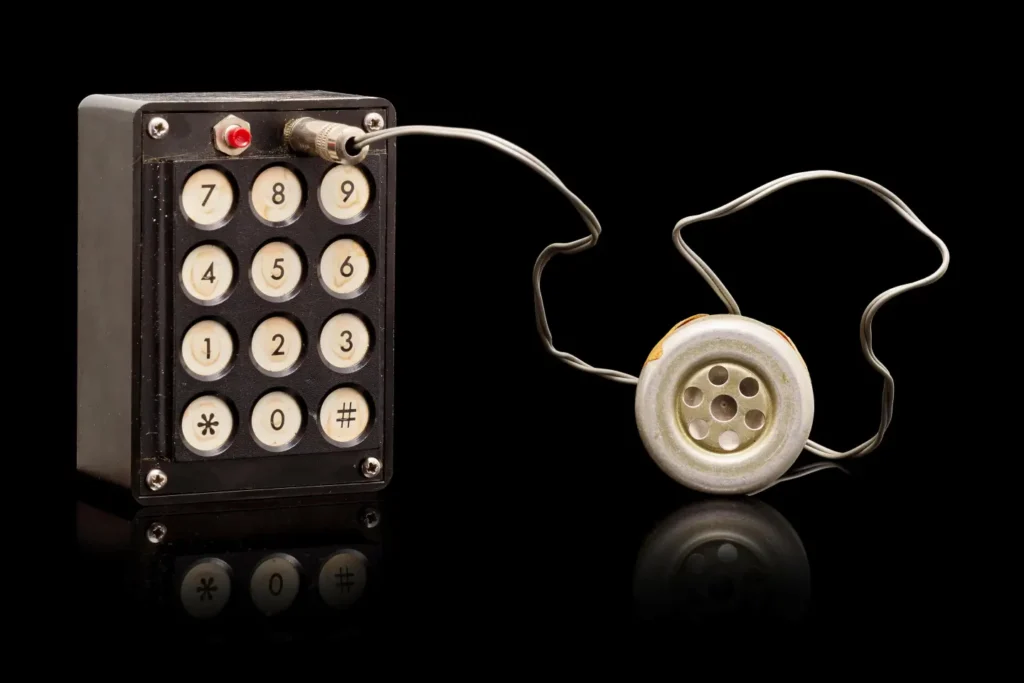
Their first project is not yet a computer. It is a small device: the Blue Box. Using the tones of the Blue Box, they can trick the telephone network and make free international calls. To test it, Wozniak calls the Vatican one night and pretends to be Henry Kissinger. He asks to speak to the Pope. But the Pope is still asleep.


Experience The Garage of Family Jobs at The Apple Museum
Your journey through Apple history begins in the Garage. Step inside for an audiovisual experience about the friendship between Steve Jobs and Steve Wozniak, the Blue Box, music, electronics and the ideas that brought them together before Apple even existed.
When the garage doors open again, the story continues with the computer that started it all: the Apple 1.

 The first Apple promise ⓘ
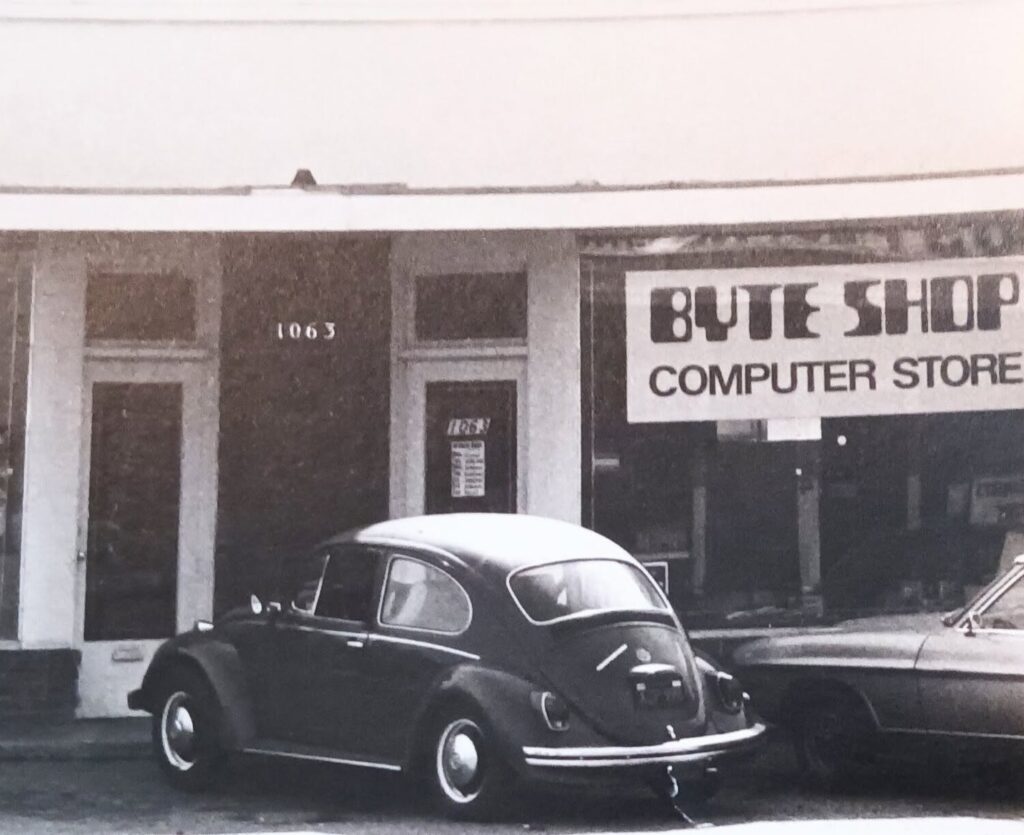
Apple’s first order came from The Byte Shop: 50 fully assembled Apple 1s. Jobs, Wozniak and friends worked in Jobs’ parents’ garage, turning a hobby project into a business. The Apple 1 sold for $666.66 because Wozniak liked repeating digits, unaware that 666 was also known as the biblical “number of the beast.”


Experience Apple 1 at The Apple Museum
See how Apple’s first computer grew from Wozniak’s hobby project into a real business. Discover the Byte Shop order, the famous $666.66 price, and why a bare circuit board was such an important step in the development of the personal computer.
At the centre of the exhibit is currently our detailed Apple 1 replica, presented as the original would have been in 1976. Only around 200 Apple 1 computers were produced, making surviving originals among the rarest and most valuable computers in the world.


Experience Apple II at The Apple Museum
The Apple II room begins with a rare Revision 0 Apple II, one of the earliest versions of the machine, with its distinctive hand-painted case.
From there, follow the complete Apple II family through the II Plus, IIe, IIc and IIGS, alongside clones, expansion cards, software and accessories from around the world.
Three working Apple II computers are available to try, and the room also includes the Apple III — Apple’s ambitious but unsuccessful attempt to conquer the business market.
 The inspiration
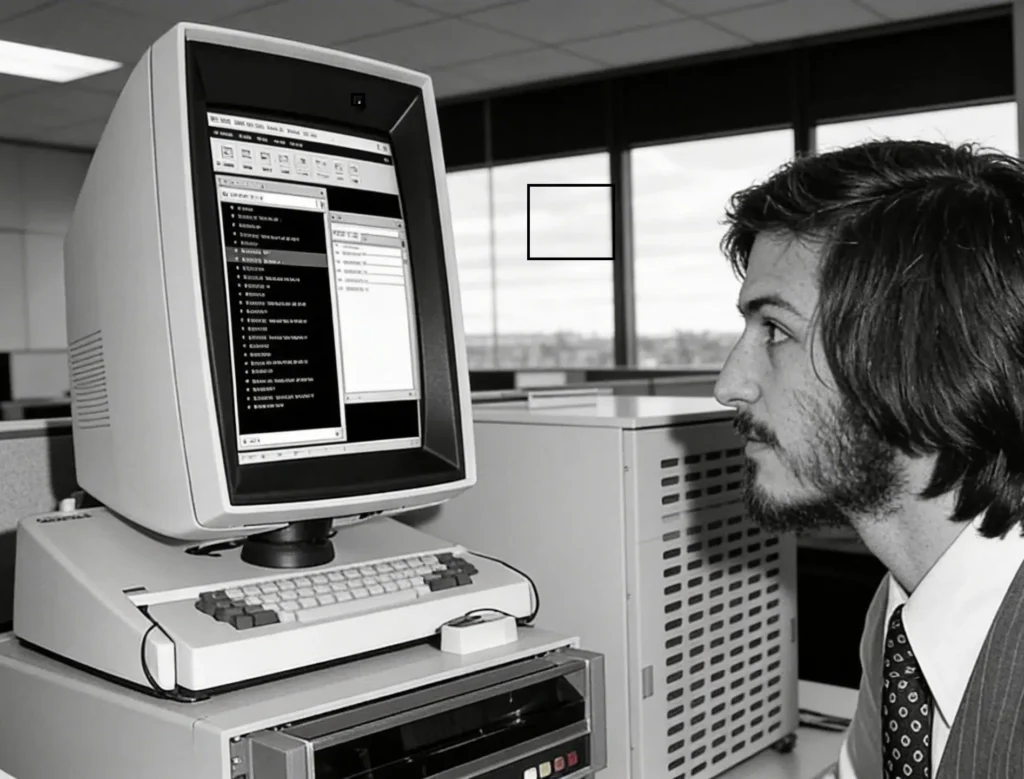
The Lisa project began as a powerful business computer. But after Steve Jobs visited Xerox PARC in 1979, the Lisa project took a new direction. Instead of typing commands, users would work visually with windows, icons, menus and a mouse. Apple developed these ideas into Lisa’s graphical interface.

 The Mouse
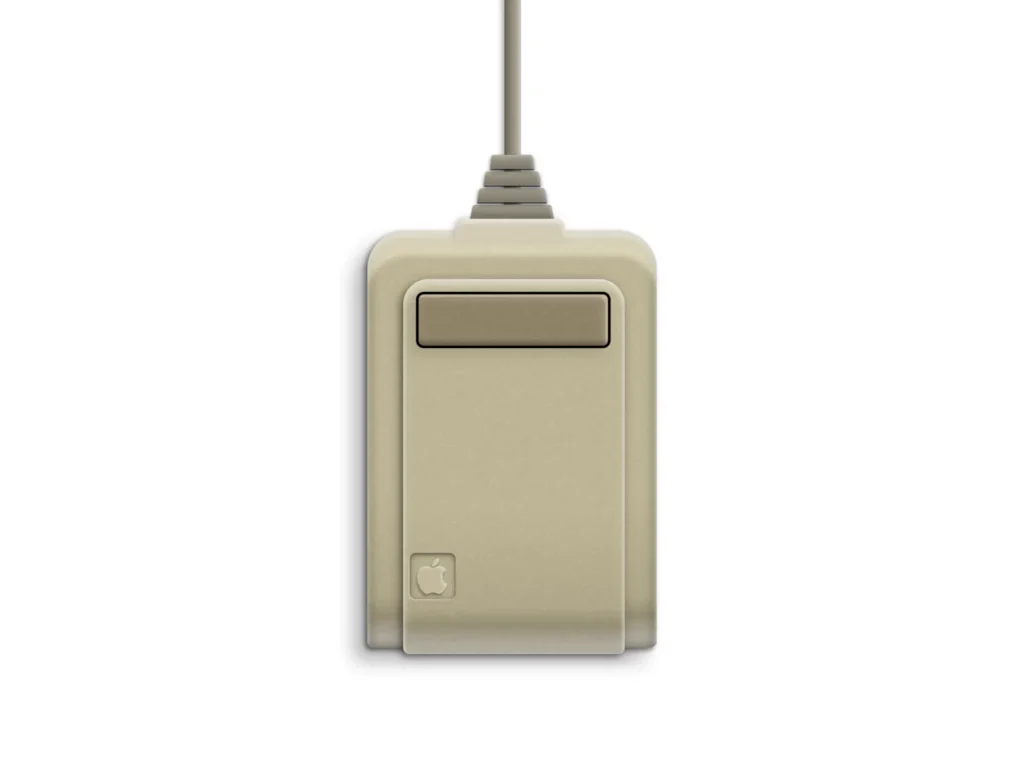
The mouse began with Douglas Engelbart in the 1960s and was later refined at Xerox PARC. For Lisa, Apple simplified it to a single button and redesigned it for inexpensive mass production.
The mouse became the centre of Lisa’s graphical interface — point, click and move instead of memorising commands.

Experience Lisa at The Apple Museum
In our Lisa room, follow the ideas behind modern computing from Douglas Engelbart’s pioneering work at the Stanford Research Institute in the 1960s to Xerox PARC and finally Apple.
See the evolution of the mouse, explore the Lisa interface, and compare the extremely rare original Lisa 1 and its Twiggy drives with the later Lisa 2.
As Macintosh software pioneer Andy Hertzfeld put it:
“Lisa was ahead of its time. It introduced concepts that are now standard, but the world wasn’t ready for it yet.”


 A Difficult Start
The original Macintosh shipped with just 128 KB of memory and initially had only a limited software library. After the excitement of its launch, sales slowed sharply, raising doubts about whether the Macintosh could become a lasting success.

Experience Macintosh at The Apple Museum
Meet the original Macintosh 128K and relive its legendary 1984 introduction, including Apple’s iconic “1984” commercial.
Discover the people behind the Macintosh through our Signatures display, with names such as Burrell Smith, Susan Kare, Bill Atkinson, Andy Hertzfeld and Bruce Horn. Follow the evolution of the compact Mac — and experience it firsthand on six original Macintosh computers that visitors can use themselves.
Then continue into our dedicated Desktop Publishing room and discover how publishing helped secure the Macintosh’s future.


 NeXT: The Road Back to Apple
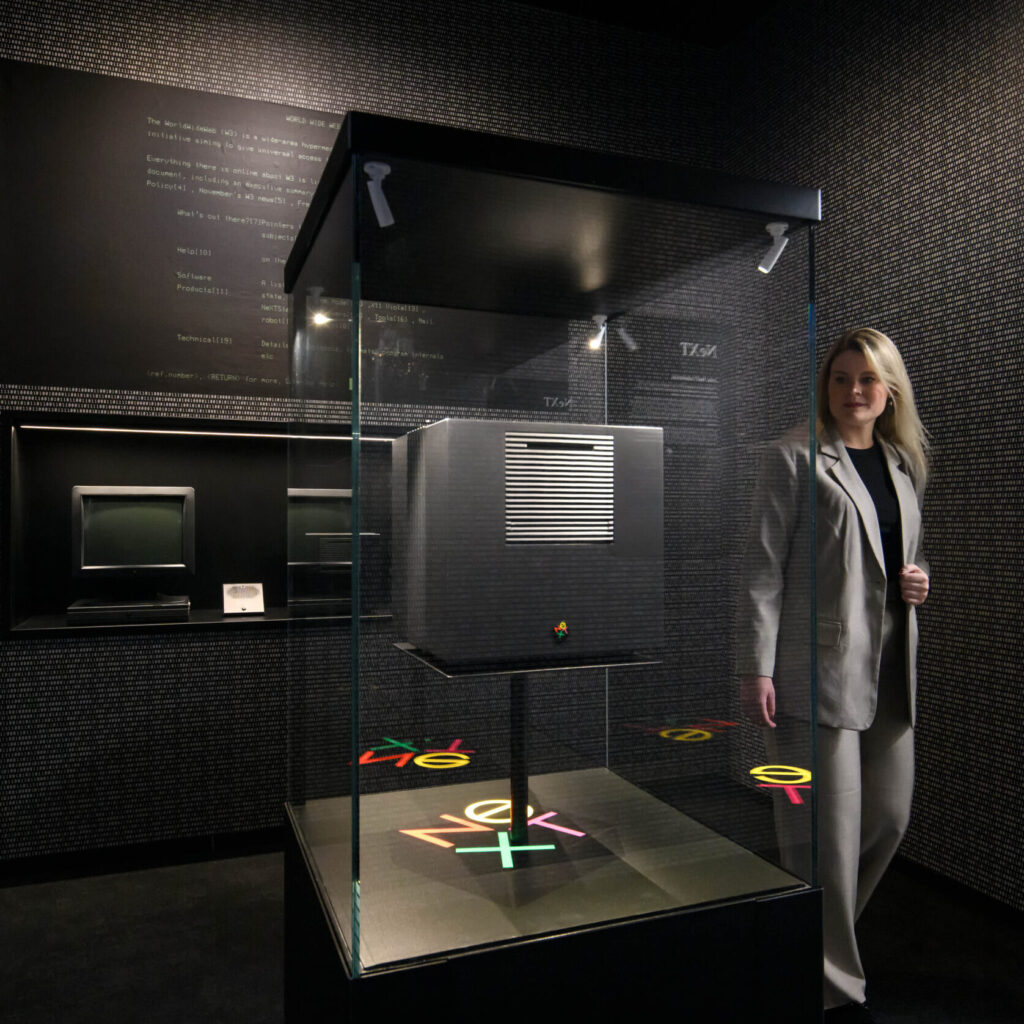
After leaving Apple in 1985, Steve Jobs founded NeXT. Its computers struggled commercially, but its software shaped Apple’s future. Apple bought NeXT in 1997, bringing Jobs back and gaining the technology that became the foundation of Apple's future OS's.

 A New Operating System
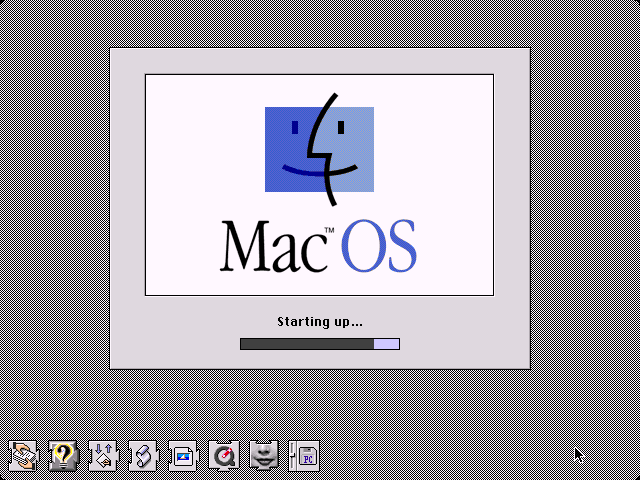
By the mid-1990s, the classic Mac OS was showing its age. Apple’s attempt to build a modern successor, Copland, failed. With time running out, Apple looked outside the company for a new operating system — and bought NeXT.

Experience the Grey Period at The Apple Museum
Explore Apple’s Grey Period through the products themselves, from PowerBooks, Newton and PowerPC Macs to QuickTime, Pippin and other experiments of the 1990s.
Play games on a Pippin, try a real NeXT Computer, and step into a black cube at the heart of the exhibition — a striking contrast to the surrounding grey Macs, and a glimpse of the technology that would help shape Apple’s future.
 Think Different
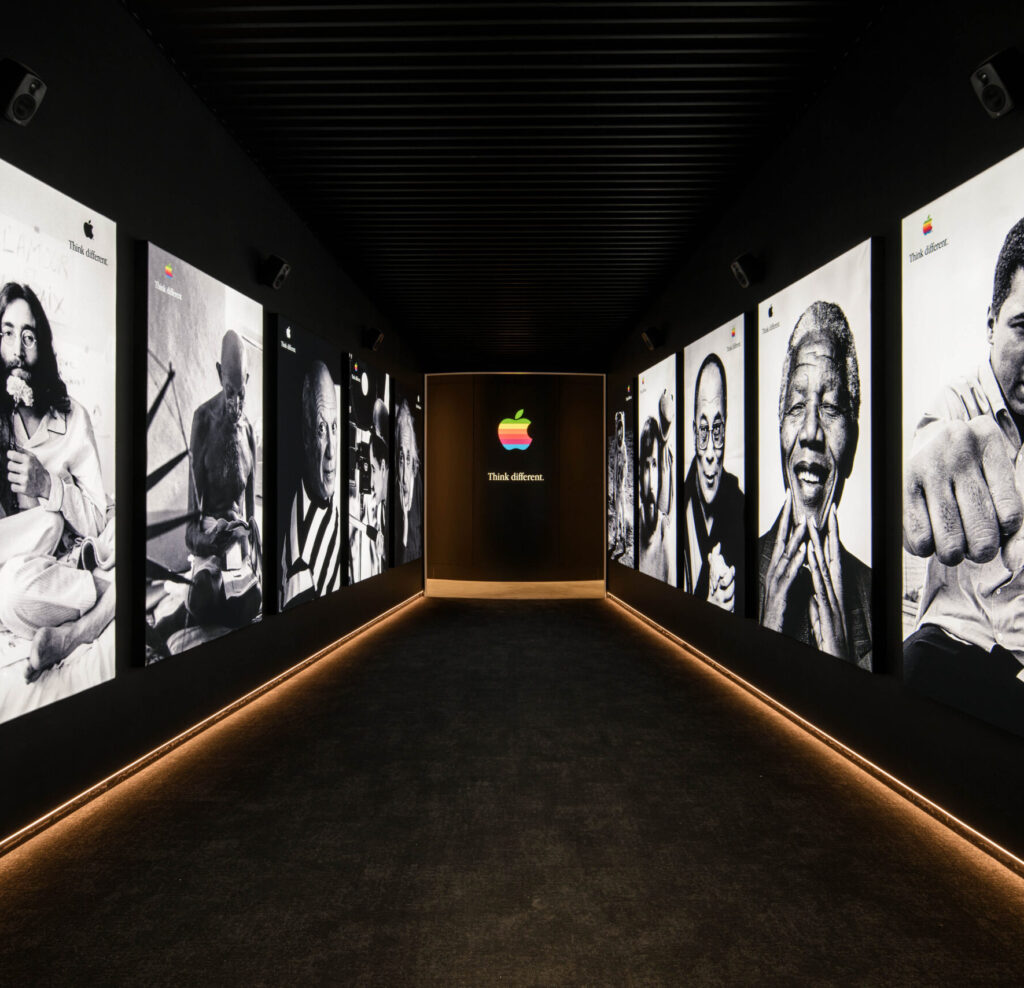
In 1997, Apple launched the 'Think Different' campaign. It did not advertise computers: it rebuilt Apple’s identity around creativity, independence and people who challenged conventions. The campaign marked the beginning of Apple’s cultural comeback.

 Tim Cook: Fixing Apple’s Supply Chain
Apple’s manufacturing and inventory problems had pushed the company to the brink. After joining in 1998, Tim Cook closed Apple's own factories and warehouses, outsourced production and slashed inventory. Suppliers such as Hon Hai, later known globally as Foxconn, became increasingly important to Apple’s manufacturing model.


Experience The Matrix at The Apple Museum
See Apple’s return to focus unfold across one of the museum’s largest computer exhibitions. From the colourful iMac G3 and clamshell iBook to the Power Mac G3, G4 and the generations that followed, almost every major Mac in the four Matrix categories is represented — right up to the modern era.
Displayed in colourful installations, the collection shows how Steve Jobs’ simple four-part product strategy evolved over more than two decades while remaining remarkably recognisable.


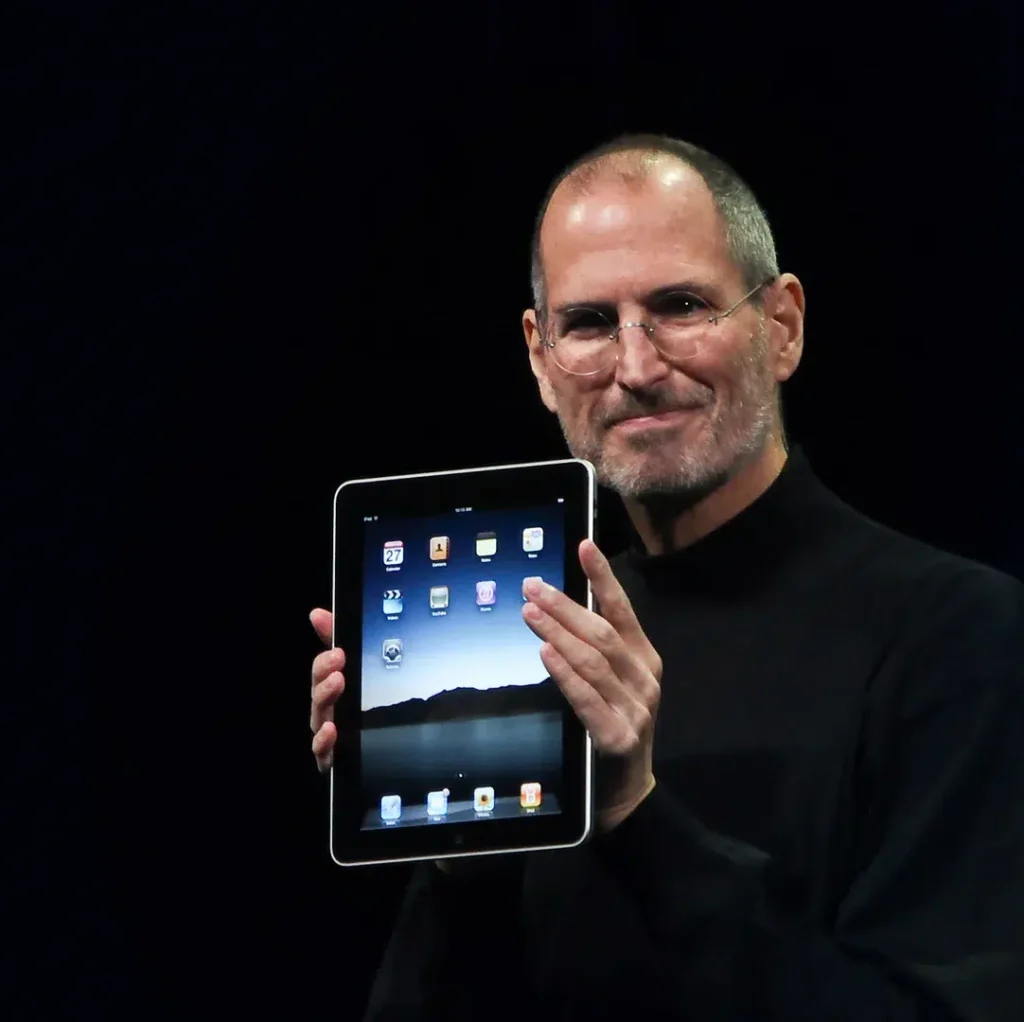 The First iPad
When the iPad went on sale in April 2010, many still doubted whether people needed a tablet. The doubts disappeared quickly: Apple sold one million iPads in just 28 days and three million in 80 days.
The iPad had turned a product category that had struggled for decades into a mass-market success.

A Product in the Middle
The iPad has always lived between two worlds: simpler than a Mac, but far more capable than an iPhone. That position has fuelled debate from the beginning — is it a media device, a creative tool, or a replacement for a computer?
Apple has kept pushing that boundary with larger screens, keyboards, Pencil and increasingly powerful chips. The iPad still refuses to fit neatly into one category — and that may be exactly what makes it interesting.


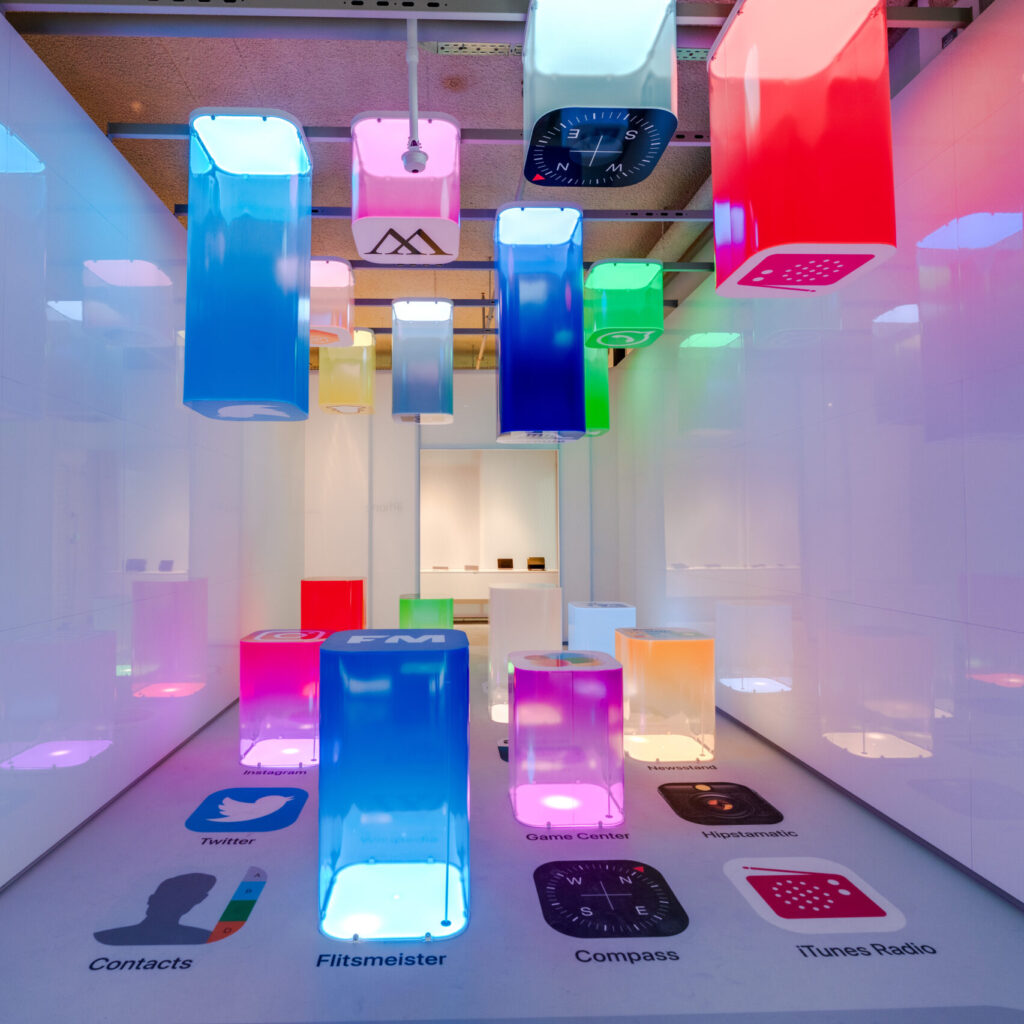 The App Store Changed Everything
The App Store launched in 2008 with just 500 apps. Ten million apps were downloaded in its first three days.
Today, the App Store offers more than 2.1 million apps, with almost 930 million downloads every week. What started as a way to add software to the iPhone became one of the largest software platforms in the world.

Experience iPhone at The Apple Museum
More than three billion iPhones have been sold since 2007. Today, iPhone alone generates more than half of Apple’s revenue — while also sitting at the centre of an ecosystem of services, accessories and other Apple products.
At The Apple Museum, follow the evolution from the original iPhone to the latest generations in one complete line-up. Explore the innovation inside different iPhones, relive Steve Jobs’ legendary 2007 keynote, and experience technologies such as Face ID through interactive displays.
Seeing nearly two decades of iPhone development side by side makes the speed of that evolution impossible to miss.


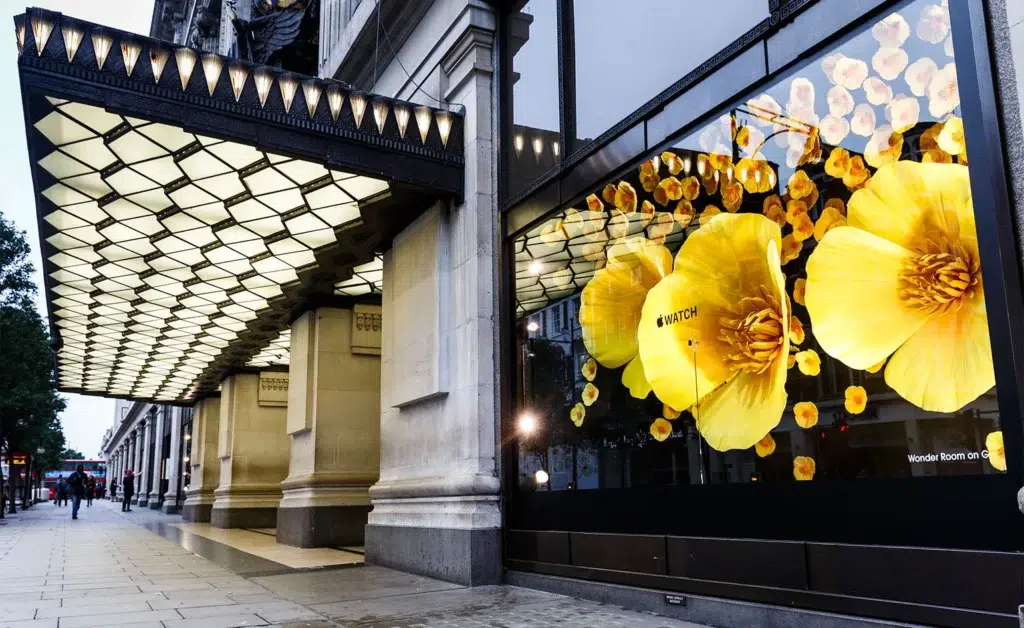 Fashion item
For the launch of the first Apple Watch, Apple collaborated with leading fashion houses and luxury boutiques. Influenced by Jony Ive and industrial designer Marc Newson, the Watch was presented as a piece of jewellery; Angela Ahrendts, former CEO of Burberry, translated that vision into Apple’s retail presentations. The flower installation recreated here was one of 24 exclusive window displays designed by Marc Newson for Selfridges in London. It formed the artistic statement of Apple’s first fashion-focused campaign: no technology, but flowers, colour and elegance – symbols of style and personality.
Technology that disappears into routine
Apple Watch succeeds when you stop thinking about it. It blends into life, but still changes behavior through subtle prompts and feedback. That is the shift: not “more features,” but “better routines.” In the Apple Museum, Apple Watch shows how Apple’s mission evolved from personal computing to personal wellbeing, without abandoning the same core principle: make complex technology feel simple.
Share this page
Stay ahead with updates in your inbox
Sign up for our newsletter and be the first to hear about upcoming exhibitions, rare Apple objects, special events and new stories from the museum.
